- Image not recoverednl6301.jpg
- The original plan for Valencia centered on a high density concept, but was realized in the cul-de-sac suburban form we know and love (or love to hate).
The final three housing developments carrying the Valencia brand are West Creek, West Hills, and RiverVillage.
Lennar is the exclusive builder on these three tracts and presently the only active builder in Valencia. Lennar also has a 15% stake in Newhall Land through a complex series of transactions involving CalPERS, a parent entity “LandSource,” bankruptcy and a number of creditors.
Building in each tract has been slowed to snail’s pace though The Signal’s coverage of their recent earnings call brings a bit of welcome light to the otherwise dim housing story (“Lennar Posts Profit, CEO Upbeat“). The Signal, in quoting Marlee Lauffer and drawing from Newhall Land’s well-known intentions with Newhall Ranch, does a decent job bringing local focus to a largely national real estate story.
This past week, Lennar consolidated all of its sales efforts for Valencia into one sales office directly across from Rio Norte Middle School.
Even with 25%-ish commercial RE vacancy, a “For Lease – Future West Creek Retail” sign stands swaying in the weed-filled lot adjacent the Tesoroplex and the now-empty Starbucks. The number of unbuilt homesites in these three developments is probably in the hundreds; the “final chapter” of Valencia’s residential build-out may take a few years to finally complete, though one can’t help but feel bittersweet emotions as the iconic, master-planned super-suburb prepares to enter another era of maturation — its first sans development. West Creek Elementary will probably be the last school built for Valencia (much to the dismay of Bouquet Canyon-area residents).
The long- and short-term forces are juxtaposed in a sort of Mexican stand off, with the inevitability of progress and setbacks of our ecomonic reality unflinchingly staring at each other in the face.
Long-time SCVTalkers, John Boston followers and SCV history buffs alike know well that Valencia was envisaged as what would now be called “smart growth” development.
Noted in the SCV History site and referenced in the headline pic:
The original concept called for much more dense and housing with a higher population than was actually built: high-rise apartments for some 200,000 people, surrounded by wide open spaces.
In thinking about the fascinating coda to Valencia that is Newhall Ranch, I can’t help but correlate the communities of Highlands Ranch and RidgeGate (in the neighboring city of Lone Tree) in Colorado. Highlands Ranch, which was developed by The Mission Viejo Company (yes, that Mission Viejo), is a Valencia-ish master planned suburb full of stucco boxes and cul-de-sacs. RidgeGate is a self-described “Eco Smart” community with all the buzzwords you’d attach to new-fangled “smart growth” development. I last visited RidgeGate two years ago when the bubble burst; though it has had its struggles, it appears the development is well on its way toward completion, though with notable mods to the timeline.
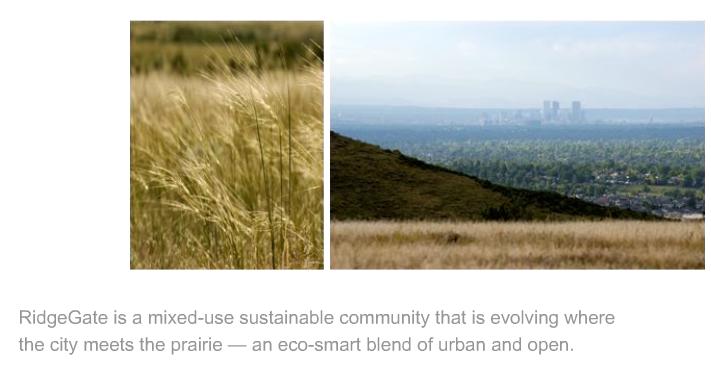
Although every new development website makes their respective community seem like the perfect utopia, RidgeGate is at least differentiated from its much-maligned Highlands Ranch neighbor. Yes, lots are small and quarters are tight. That’s a non-starter for some; but for the rest, the concept of having everything a walk away is a welcome change. For those with the misfortune of working in the city, light rail was extended to accommodate the development, as was significant freeway infrastructure (including a brand new interchange).
Newhall Ranch still has a ways to go before breaking serious ground; but we all feel the drumbeat pounding – particularly as the development in Valencia ends its near-half-century run. Let’s just hope We need to demand that the infrastructure is ready, abundant, and built-to-scale.
Comments
10 · as published