
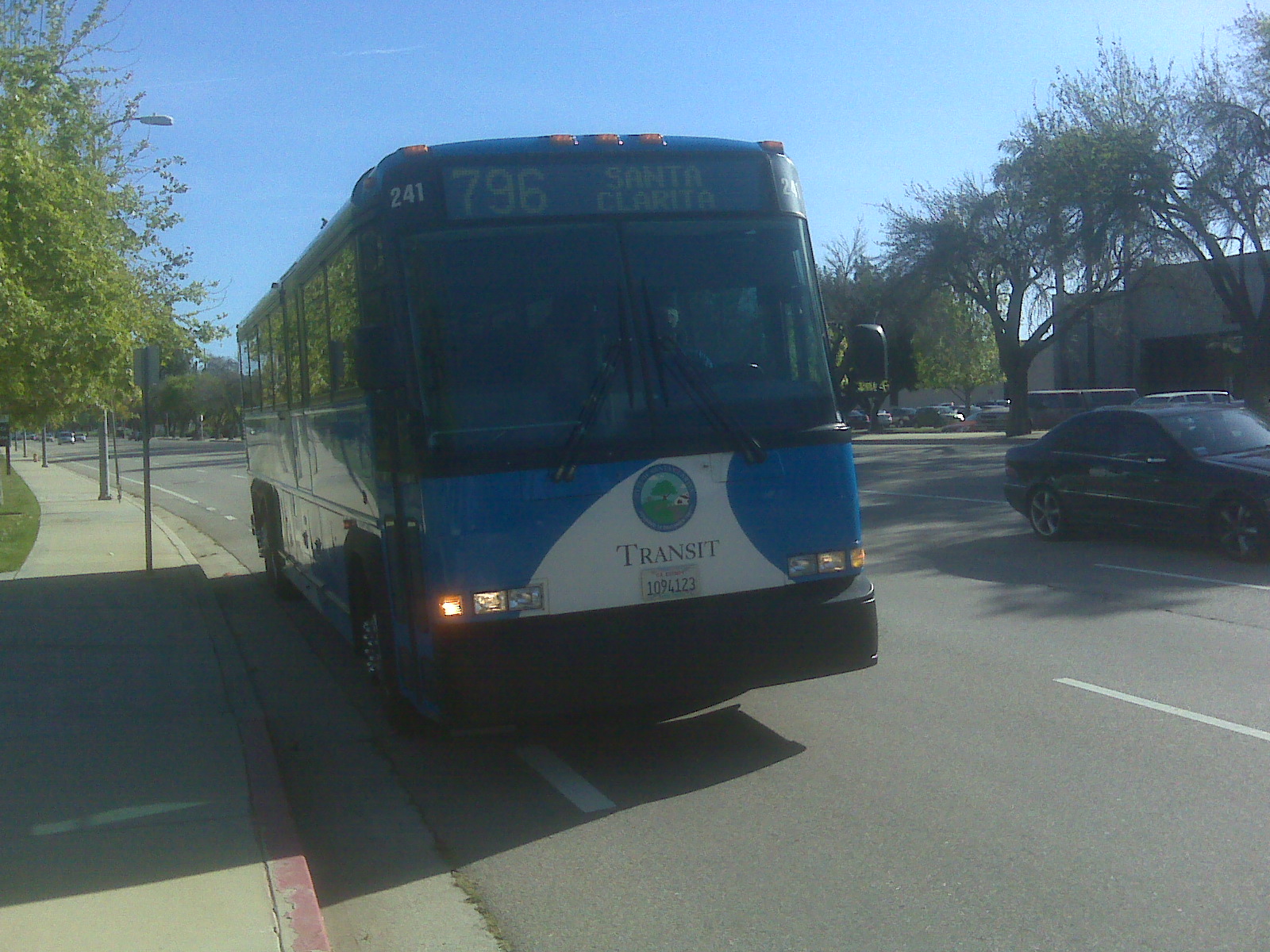
SC Transit Represented in the SFV
It’s been over a year since we moved to SCV. I commute daily to the west SFV, which takes anywhere from 40 minutes to an hour each way. It isn’t a bad commute, especially considering the 30 mile distance (our previous digs in the east SFV took roughly the same time and it was half the distance!).
But the commute can be a grind. And gas prices are up an average of 80 cents a gallon since last year.
I was aware of the Santa Clarita Commuter Express before we moved to this valley as part of my due diligence in researching the area. But there were always unknowns that prevented me from taking the leap. How do I pay? How do I know I’m on the right bus? What if I miss it? Is it comfortable? Where do I park my car? What if I’m stranded? To some, the answers to these questions are obvious. But some who rely on their own four wheels have an irrational fear or hatred of keyless transportation.
A few months ago, I worked up the courage to give mass transit a try for my daily commute. Just a one time trial to see how it went.
I found the experience relaxing, inexpensive and surprisingly convenient.
Here is a guide for the uninitiated.
1. Find out if it goes where you go.
Start at the SCTransit Commuter Express landing page. They recently created an interactive map to assist with the process, but it’s mostly a high level overview. To get to the specifics, you’ll need to check out the full schedule:
Santa Clarita Commuter Express Timetable
Curiously, the PDF has a link to CommuteSmart.com, which has some generic commuting info but is geared toward the Silicon Valley. You can look at individual routes on the SCTransit site, too.
2. Show up.
The Commuter Express routes have varying pickup points through Santa Clarita but nearly all pass by the Town Center (or at least close to it). If you’re like me and don’t live near a pickup point, you can drive to one and park nearby. There is generally ample on-street parking in the nearby neighborhoods, though later pickups may involve a longer walk to the bus stop. Only a few pickup points have bike racks, which is a letdown. On the other hand, there is space for a full size bicycle in the undercarriage of the coach. Just let the driver know and s/he will give you a hand.
3. Pay.
Two options – exact change (both dollars and coins) or the recently introduced “Transit Access Pass” or TAP card. Express fares range from $2.50 to $4.00 each way. TAP is a cashless fare wallet that can hold both a monthly pass or deduct from a pre-loaded balance. The latter is a welcome addition to TAP, which previously required the commitment of a monthly pass. TAP cards are available at City Hall and the Transit Maintenance Facility (near the Wal*Mart off Copper Hill).
An average seat/row in Express. Plenty of legroom and drink holders to boot.
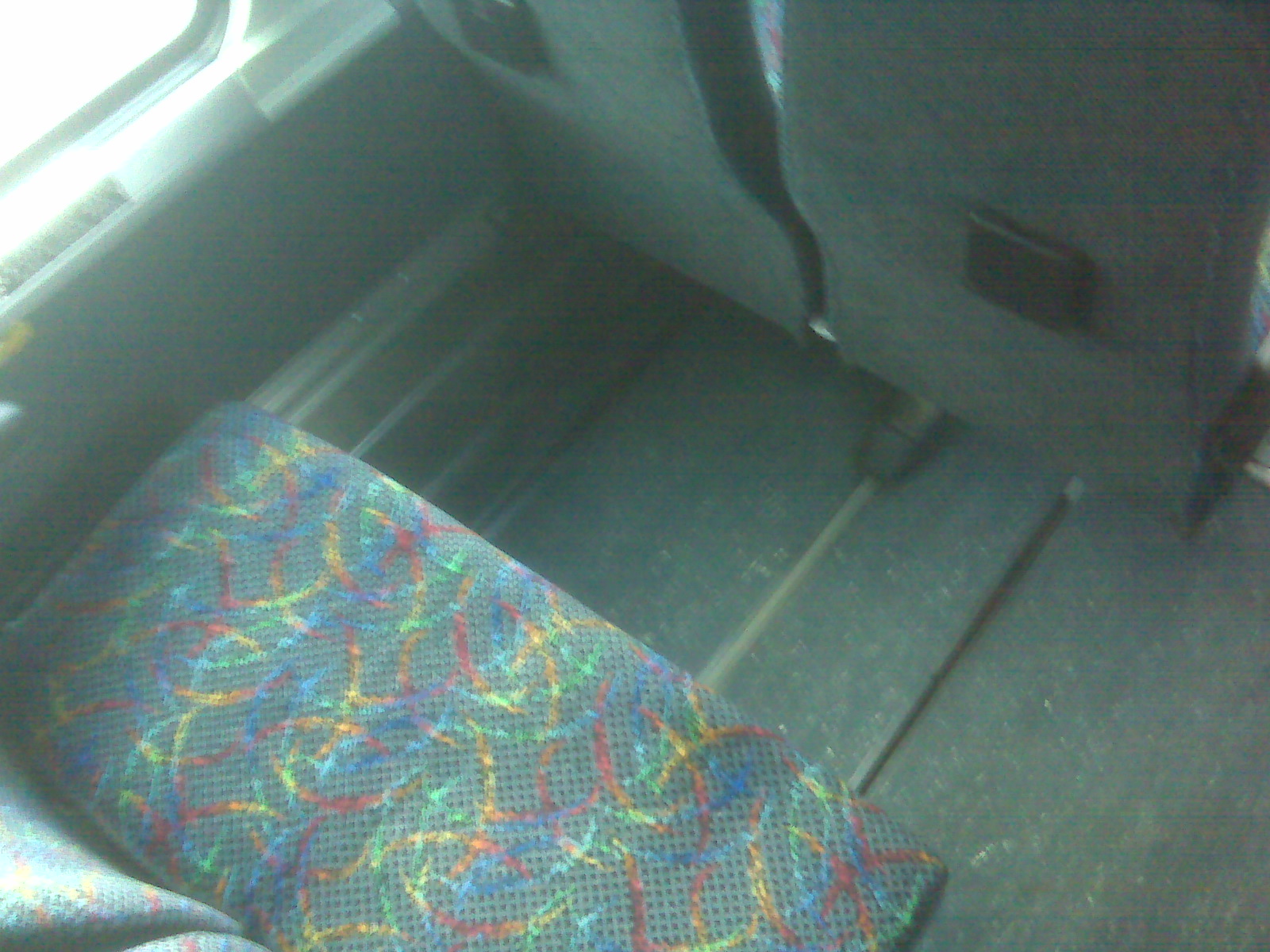
An average seat/row in Express. Plenty of legroom and drink holders to boot.
4. Sit.
Since you’re going to be sitting in the coach for a while, the seat is perhaps the most important aspect of the journey. The Express seats have ample legroom, similar to “premium economy” on an international flight. Each has an overhead reading light and individual climate control. The seats recline (most of them, anyway – some in the front do not) by squeezing a handle on the underside of the armrest. Most have an integrated drink holder – flip down style, with flexible arms. There are also handicap seats with extra room, which offer priority seating to those with disabilities. I’ve witnessed Express drivers assist individuals in wheelchairs and the elderly sit there. I also have a tendency of sneering at snot nosed yuppies that sit in the handicap row, too.

Passenger (left) enjoying the extra space afforded by the handicap row. No, she's not handicapped. Yes, I sneered.
5. Be courteous
In consideration of fellow passengers, please follow “Commuter Etiquette,” defined by SCTransit as:
• Electronic devices such as laptops and portable DVD players are permitted on the bus.
• All electronic headphone devices should be for your ears only.
• Talk low so no one will know.
• Don’t engage in “cell yell.”
I have experienced some longtime riders making it known to all who are in earshot that they are longtime riders.
- “Sheesh. Gas prices must be going up again!”
- “HI GEORGE! GOOD TO SEE YOU! SO, YEAH – I GOT THIS NEW JACKET AND…”
- “Here he comes – the guy with all the loose change…”
It’s unfortunate, but there is definitely a clique element for some riders, that’s thankfully they are in the minority.
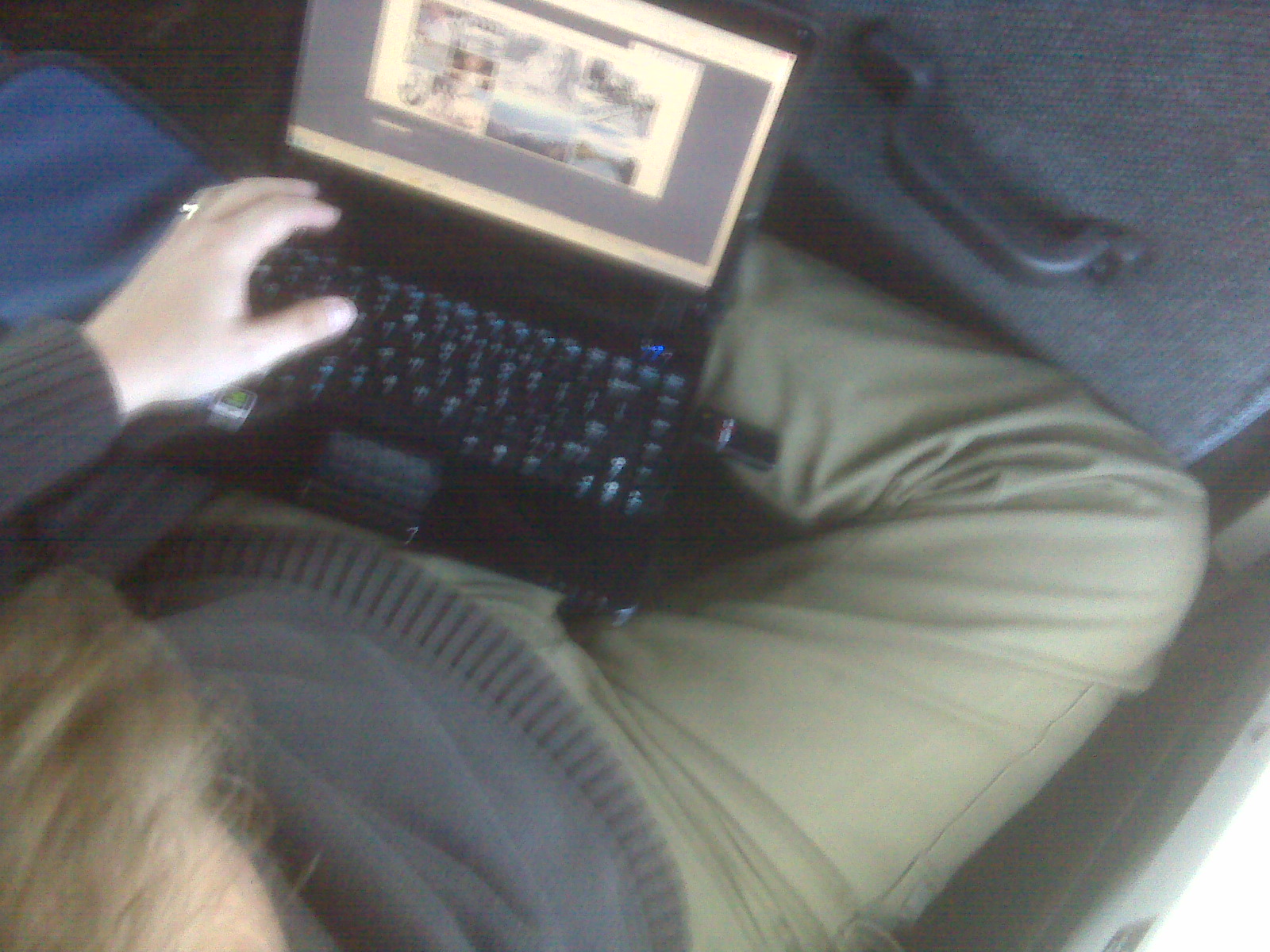
Days of space, almost enough to cross ones legs, pull out a laptop, and catch up on the Daily Brief.
6. Relax
- Open the newspaper.
- Read a book.
- Rest.
- Stare.
- Work.
- Listen to music.
- All of the above.
7. Arrive
There’s a “Stop Request” button overhead. When the coach nears your stop, press it to let the driver know you’re getting off. Thank your driver.
 8. Get notified

SCTransit offers a free, handy service called “U-Text” that will text passengers if there is an unforseen change in the route. Since signing up three months ago I have received a text message only once letting me know that one of the six returning bus routes was canceled that day. I’m not sure how consistent this service is, and the drivers are unaware of its existence. It’s a question mark at this point.
Downsides
Time. It will definitely add a few minutes to your commute, possibly 10-15 minutes each way. That may be a killer for some, but there’s a huge offset of productivity on the bus – and arriving at work/home refreshed rather than bedraggled from road rage.
Freedom. Yes, you are bound to the schedule and your two legs at lunch time. Commuter Express buses generally leave earlier in the morning than most solo drivers. On the other hand, my spouse is quite pleased with the predictability of the schedule. I have also found a number of folks at the office are quite happy to have me as a carpool “mule” should I so choose.
Upsides
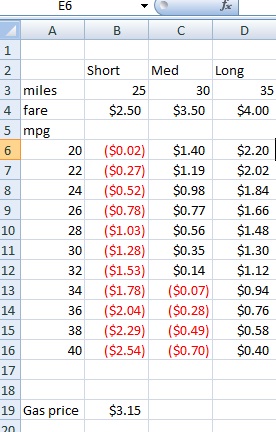 Cost. Based solely on fuel costs, there are too many variables to project whether you’ll save money using Commuter Express. Your vehicles mileage and your commute distance are the primary drivers for comparison. In roughing out a spreadsheet, it can vary from an incremental $1 to a savings of $2.20 each way, and various gradations in between. Since the cost to ride is fixed, the longer you spend on the bus, the more coin you save. This is especially true for transfers between agencies for extended commutes, which cost a mere quarter – but increase the time and complexity involved with the journey. However, when you add the 37 cent cost-per-mile of operating a motor vehicle (the 2010 IRS figure is 50 cents per mile, less gas @ ~13 cents per mile), mass transit most definitely works out in the rider’s favor.
Arrive refreshed. One can’t put a price on this. If you factor the opportunity cost of opening a newspaper or a laptop…
Environmentally friendly. Look, these things are going to run whether you’re on them or not. The Commuter Express fleet unfortunately runs on diesel (vs the local fleet, which has some CNG coaches) but you’re taking your car off the road, too.
Closing Thoughts
We are fortunate to live in a city that affords its citizens this type of service. I’m sure there are others that do, but it is extremely rare – especially on a coordinated scale. The Express is now part of my weekly 2-1-2 commute goal (two bus rides, one solo drive in, two carpool days) that represents a broader effort to go green and save a few bucks.
Do you work near one of the Commuter Express drop off points? Are you still skeptical?
Try it just once. There are plenty of reasons why it might add to your quality of life, and perhaps a few that would benefit more than just you. Think of it as a small but meaningful thing you can do in honor of Earth Day this month.
 Loading ...
Comments
11 · as published